
Relocate with Confidence
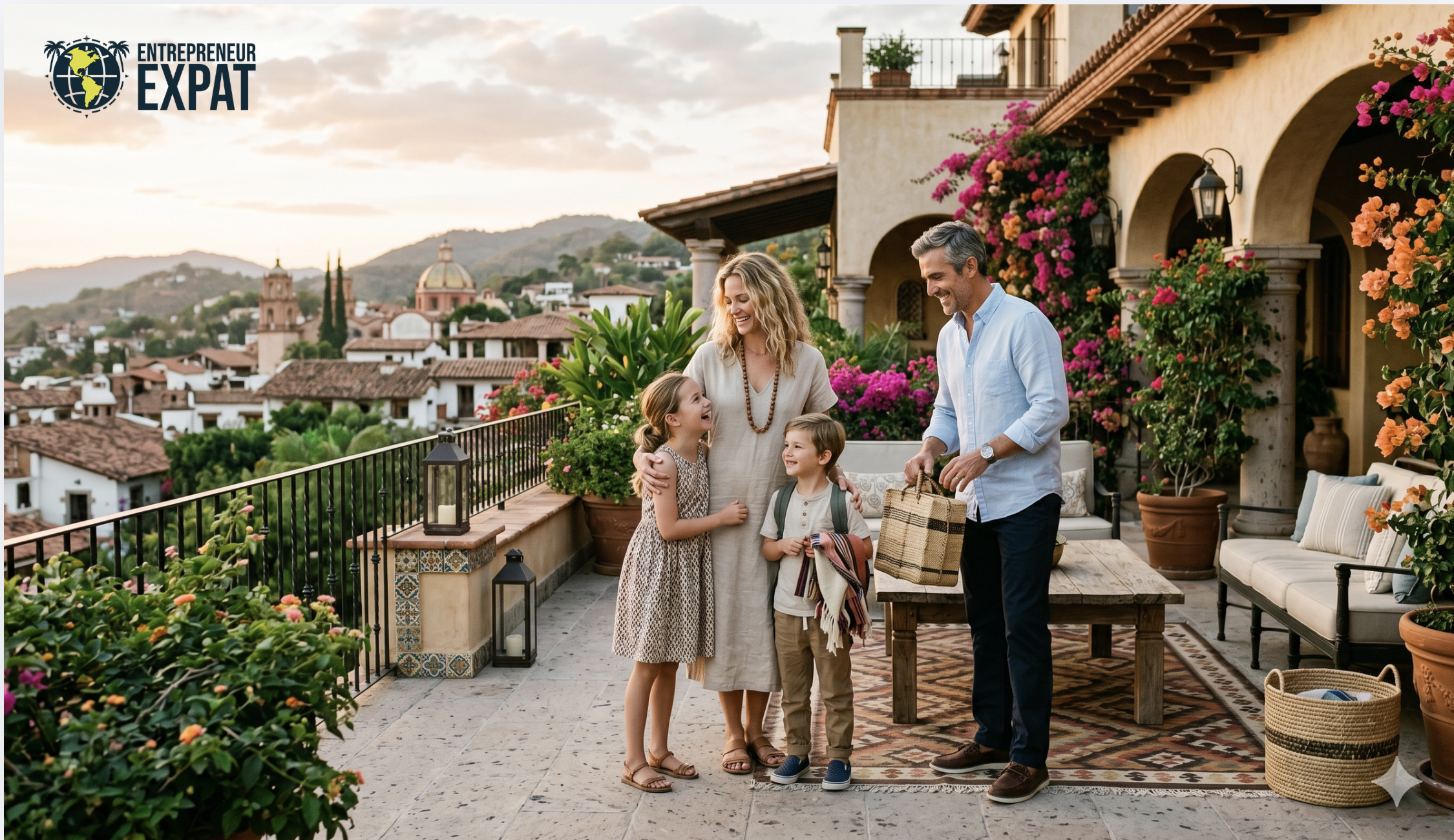
Families moving to Mexico need a plan that supports visas, housing, healthcare, and daily life.
Moving to Mexico with a spouse or family can be one of the best decisions you make, but it also requires a very different level of planning than moving alone. When you are relocating by yourself, you can be more flexible. You can test neighborhoods, tolerate inconvenience, and adjust on the fly. When you are moving with a partner, children, or other dependents, the margin for error gets smaller.
That is why moving to Mexico with a spouse or family should never be treated like a casual lifestyle experiment. It needs to be handled like a real transition plan.
For some families, Mexico offers a chance to step into a better quality of life. You may gain more space, better weather, access to household help, private healthcare, a slower pace of life, and the freedom to design a lifestyle that no longer revolves around surviving rising costs back home. For others, the move is also strategic. It may be about escaping high taxes, gaining more flexibility, reducing pressure, building an international life, or creating a better environment for raising children.
But even when the move is clearly the right one, families still run into trouble when they underestimate how many pieces need to fit together. Housing, visas, schooling, healthcare, budgeting, routines, emotional adjustment, and relationship dynamics all matter.
If you are thinking about moving to Mexico with a spouse or family, here is what you should know before making the leap.
Start With Shared Vision Before You Start With Logistics
One of the biggest mistakes couples make is diving into logistics before they are truly aligned on the reason for the move.
It is easy to get excited about lower costs, beautiful homes, warm weather, domestic support, or the dream of living near the ocean or in a vibrant expat community. But a family move works best when the vision is deeper than lifestyle marketing. Everyone does not need to be equally excited in the same way, but the core purpose should be clear.
Ask yourselves honest questions:
Why do we want to move?
Maybe it is for financial breathing room. Maybe it is for a better daily lifestyle. Maybe it is because you are tired of working hard just to maintain a life that no longer feels inspiring. Maybe you want more time together as a family. Maybe you want access to better value, more freedom, and a more intentional environment.
What do we want our life to look like after the move?
This question matters more than people realize. Are you trying to create a quiet family life? A socially active expat lifestyle? A business-building chapter? A semi-retirement setup? A part-time base in Mexico with international travel? These are all different models.
What is each person afraid of?
This is where the real conversation begins. One spouse may worry about safety. Another may worry about leaving extended family. One person may worry about schools. Another may worry about losing professional identity or routine. Those concerns do not go away just because the move makes financial sense.
What are our non-negotiables?
For one family, it may be walkability. For another, access to private healthcare. For another, a strong expat community or an international school. Getting clear on this early saves enormous stress later.
When moving to Mexico with a spouse or family, alignment is not a soft issue. It is foundational.
Understand That Family Relocation Is Not Just a Solo Move Plus Extra People
A lot of people make the mistake of planning a family move the same way they would plan a solo move. They assume they can just scale it up.
That usually does not work.
A family relocation has more variables and more dependency between systems. The school schedule affects the housing search. The housing search affects commute times. The visa timeline affects the move date. The move date affects whether you rent first or buy first. Healthcare planning affects your budget. Your budget affects location. Your location affects social adjustment.
This is why moving to Mexico with a spouse or family is not simply a more expensive version of moving alone. It is a more interconnected one.
That is also why families tend to benefit from a more integrated relocation plan. If immigration, real estate, taxes, and lifestyle decisions are handled in separate silos, people often make one decision that unintentionally creates a problem in another area.
Residency and Visa Planning for Families Needs to Be Done Carefully
Immigration is one of the most overlooked parts of moving to Mexico with a spouse or family. Many people assume they can arrive on a tourist permit, figure out where they want to live, and then sort everything out later. That is a risky strategy, especially when children or dependents are involved.
The right residency path depends on your financial profile, long-term plans, and timing.
In many cases, one spouse may qualify financially and the other spouse and children may derive status through that family relationship. But that does not mean the process is automatic or simple. Documentation matters. Timing matters. Consulate requirements matter.
You may need to think about:
- marriage certificates
- birth certificates for children
- apostilles
- translations
- validity windows on certain documents
- consular appointments
- financial qualification evidence
- whether you are applying for temporary or permanent residency
- whether you want to begin the process outside Mexico or structure the timeline around another move
If you are moving to Mexico with a spouse or family, your immigration plan should be built before the moving truck is loaded. The more people involved, the less room you have for “we’ll figure it out later.”
Temporary vs Permanent Residency Matters More Than People Think
Families often ask whether they should apply for temporary residency or permanent residency. The answer depends on your case, but the decision should be strategic.
Temporary residency can make sense for people who want flexibility, are still testing whether Mexico is the right long-term fit, or may not yet qualify for permanent status. It can also work well for families who want time to get established before making deeper commitments.
Permanent residency may be more attractive for people who know Mexico is part of their long-term life plan and want more stability from the beginning.
What matters is not choosing based on what sounds better. What matters is choosing based on your actual goals and your eligibility.
A family that expects to live in Mexico full time, buy real estate, enroll children in local or international schools, and establish a long-term base may think very differently than a couple exploring seasonal living.
Housing Decisions Affect the Entire Family Experience
Housing is not just a financial decision when you are moving to Mexico with a spouse or family. It is a quality-of-life decision that affects everything else.
A beautiful home that is far from daily services can become frustrating quickly. A charming neighborhood that feels exciting for a weekend may feel isolating for full-time life. A property that works for a retired couple may not work for a family with young children and remote work needs.
When families look at housing, they should think beyond surface-level aesthetics and ask practical questions such as:
How far are we from the places we use every week?
That includes grocery stores, pharmacies, hospitals, schools, cafes, restaurants, gyms, and community spaces.
Is the internet strong enough for work and school?
This is especially important for entrepreneurs, remote workers, content creators, and families using online education.
Does the home support our real daily routine?
Open floor plans and beautiful terraces are great. But where will people actually work? Where will children do schoolwork? Is there a quiet space to take calls? Is there enough storage? How hot does the property get in the afternoon?
Is the neighborhood a fit for our family stage?
Some areas are perfect for retirees and less ideal for younger families. Some are beautiful but inconvenient. Some have stronger community than others. The “best” area depends on the life you are building.
Why Renting First Is Often Smart for Families
Many families benefit from renting before buying, even if they know they eventually want to own.
Renting first gives you space to:
- learn the market
- understand neighborhood differences
- experience daily traffic and convenience
- confirm school and healthcare access
- test whether the area fits your family rhythm
- reduce emotional pressure during the first stage of the move
This is especially helpful if you are moving to Mexico with a spouse or family and one or more people are still adjusting emotionally. Renting first creates breathing room. It gives you a chance to make a real estate decision from clarity instead of urgency.
That does not mean buying immediately is always wrong. Some families are absolutely ready to buy. But buying before you understand how you actually live in a new area can create friction that was avoidable.
If You Have Children, Schooling Changes the Equation
For families with children, schooling is one of the biggest deciding factors in where and how they move.
Some families choose private local schools. Some choose international schools. Some homeschool or use hybrid education models. Each path creates a different daily structure, social environment, and budget.
When thinking about schools, look beyond the school itself and consider:
- how long the commute will be
- whether the teaching style fits your child
- how much Spanish exposure you want
- whether your child needs a softer transition
- what extracurricular activities are available
- what kind of social environment you want your children in
If you are moving to Mexico with a spouse or family, it is worth remembering that children often adapt better than adults when they feel secure, included, and supported. What makes the biggest difference is not whether everything is perfect. It is whether the family feels grounded.
Healthcare Needs to Be Part of the Front-End Planning
Healthcare is one of the first concerns people raise when moving abroad with a family, and for good reason.
Parents want to know that if a child gets sick, they can access competent care quickly. Couples thinking long term want to understand routine care, specialist access, insurance options, out-of-pocket costs, and emergency care quality. Families with older dependents or specific health needs need even more clarity.
Mexico offers strong private healthcare in many parts of the country, and for many expats the quality-to-cost ratio feels like a major upgrade from what they experienced back home. But that does not mean you should move without a healthcare strategy.
You want to know:
- which hospitals and clinics are near your intended location
- whether there are English-speaking providers if that matters
- what your likely routine and emergency costs would be
- whether private insurance makes sense for your family
- what your backup plan is for major care decisions
- how you want to split care between Mexico and your home country, if at all
Families who plan healthcare early tend to feel more confident in the move. For more on healthcare, read our in depth guide on how healthcare works in Mexico.
Budgeting for a Family Move Means More Than Comparing Rent Prices
One reason families move to Mexico is because they want more value. That is often exactly what they find. But a smart move is not based on vague assumptions about life being cheaper. It is based on a real budget.
Your family relocation budget may need to account for:
- immigration expenses
- travel and moving costs
- rent or purchase costs
- deposits and setup costs
- private healthcare or insurance
- school tuition if applicable
- transportation
- furnishings
- house help or childcare
- legal and tax planning
- emergency reserve funds
- trips back to the U.S. or Canada if needed
The good news is that many families find they can access a significantly better lifestyle for the same or lower monthly spend than back home. But the families who feel most stable after moving are the ones who planned intentionally rather than assuming it would all work out.
Your Relationship Will Be Affected by the Move
Any major relocation puts pressure on a relationship, even when the move is the right one.
Roles may shift. One spouse may adapt faster than the other. One person may be building a business while the other feels untethered. One may love the change while the other misses old routines. If children are involved, the emotional load can multiply.
That is normal.
Moving to Mexico with a spouse or family often brings up identity shifts that people did not anticipate. The partner who felt competent and confident back home may suddenly feel disoriented. The spouse who pushed hardest for the move may feel guilty if the adjustment is slower than expected for the rest of the family.
This is why strong family relocations make room for transition instead of pretending it should all feel easy right away.
A few things help:
- talk openly about what is hard
- expect an adjustment period
- create new routines quickly
- avoid making the first few months mean too much
- keep revisiting what is working and what is not
- remember that transition is not failure
Community Matters More Than Most Families Expect
People often underestimate how important community is when moving to Mexico with a spouse or family.
A beautiful house is not enough. A lower monthly cost is not enough. At some point, people want relationships, rhythm, belonging, and practical support.
That may mean:
- nearby expat friends
- local families
- activity groups
- sports or classes for children
- business contacts
- trusted service providers
- churches or spiritual communities
- neighborhood relationships
Some areas of Mexico make this easier than others. That is one reason places with established expat communities continue to appeal to families. It is not just about familiarity. It is about the smoother landing that community can provide.
Moving Abroad Changes Family Identity in Good Ways Too
A lot of content about moving abroad focuses on the logistics or the problems. Those things matter, but so do the benefits.
Moving to Mexico with a spouse or family can reshape your life in meaningful ways:
- more shared time together
- less stress tied to cost of living
- greater daily flexibility
- more family meals and time outdoors
- exposure to a richer cultural environment
- more intentional lifestyle design
- a different relationship to time, work, and quality of life
For some families, the move becomes the beginning of a life that finally feels like theirs instead of one they inherited by default.
Common Mistakes Families Make When Moving to Mexico
There are a few patterns that tend to create problems.
Moving without true alignment
If one person is dragging the rest of the family emotionally, tension tends to surface later.
Underestimating paperwork
Families often do not realize how much documentation matters until they are already under pressure.
Buying too fast
Excitement and urgency can lead to a home choice that does not fit long-term daily life.
Ignoring tax and legal planning
Cross-border life should be structured, not improvised.
Treating the move like an extended vacation
Vacation energy hides practical issues. Real life reveals them.
Failing to plan for emotional transition
Even a good move can feel hard before it feels normal.
Final Thoughts on Moving to Mexico With a Spouse or Family
Moving to Mexico with a spouse or family can be one of the most rewarding shifts you ever make, but it works best when it is planned holistically.
This is not just about visas. It is not just about finding a nice house. It is not just about lowering costs. It is about designing a life that works for everyone involved.
When families approach the move with clear vision, strong planning, realistic expectations, and the right support, Mexico can offer something many people feel they have lost in North America: more freedom, more value, more quality of life, and more room to actually live.
Relocate the Right Way
FAQ Section
Is moving to Mexico with a spouse or family a good idea?
Moving to Mexico with a spouse or family can be a great idea if you plan it well. Many families choose Mexico for better quality of life, more value for their money, warmer weather, access to private healthcare, and a more flexible lifestyle. The key is making sure visas, housing, healthcare, schooling, and finances are all thought through in advance.
Can my spouse and children get residency in Mexico too?
Yes, in many cases a spouse and children can qualify as dependents when one family member meets the financial requirements for Mexican residency. The exact process depends on your situation, your documentation, and the consulate handling your case.
Should families rent before buying in Mexico?
For many families, renting first is the smarter move. It gives you time to learn the area, test neighborhoods, understand commute times, and see how daily life feels before making a major real estate decision.
What is the best place in Mexico for families and expats?
The best place depends on your priorities. Some families prioritize strong healthcare, established expat communities, and mild climate, while others care more about schools, beach access, walkability, or lower costs. The right fit depends on your lifestyle goals and family structure.
How much money do you need to move to Mexico with a family?
The amount varies based on your location, housing style, school choices, healthcare strategy, and whether you are renting or buying. Families should budget for immigration costs, deposits, setup expenses, monthly living costs, and emergency reserves.
Is healthcare in Mexico good for expat families?
Private healthcare in Mexico can be excellent in many areas and is one of the reasons many expats feel comfortable relocating. The best strategy depends on your location, family needs, and whether you want private insurance, self-pay care, or a hybrid approach.
Do children adjust well to living in Mexico?
Many children adjust surprisingly well, especially when the family has a stable routine, good housing, strong schooling options, and emotional support during the transition. Children often adapt faster than adults when they feel safe and included.
What is the biggest mistake families make when moving to Mexico?
One of the biggest mistakes is treating the move like a vacation upgrade instead of a real life transition. Families do best when they plan around daily life, not just excitement.